Outfit Photo Comparison: The Smartest Way to Choose What to Wear
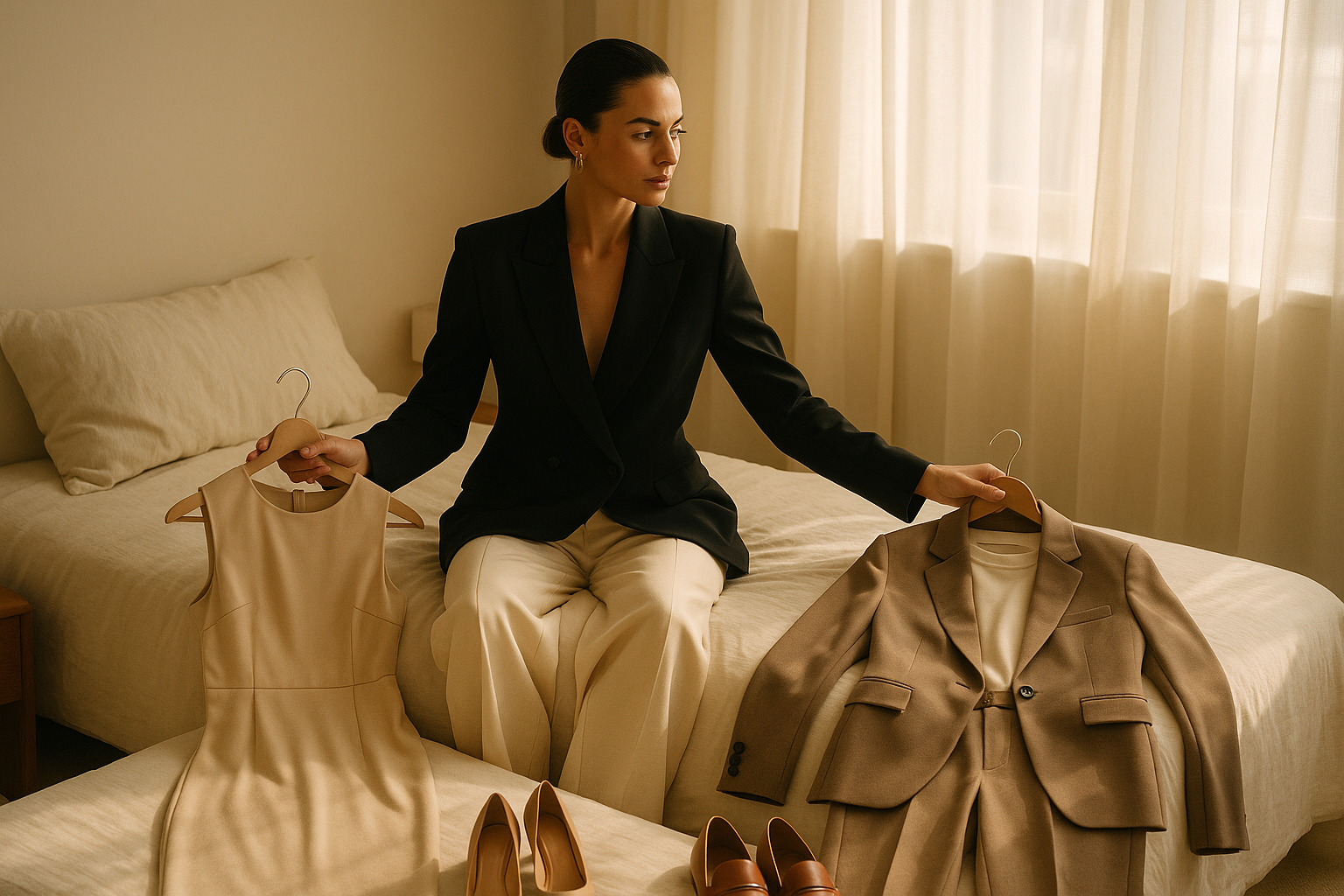
You're standing in front of the mirror, wearing outfit A. It looks fine. You switch to outfit B. Also fine. You switch back. Still not sure. Twenty minutes later, you're late and wearing something from three days ago.
This is what happens when you rely on your brain to hold two visual options at the same time. It can't. Not well, anyway. That's where outfit photo comparison changes everything.
The idea is simple: take a photo of each option, then compare them side by side. When both outfits are in front of you simultaneously, your eye catches things that pure memory and mirror-switching miss. Fit problems. Proportional issues. Which one actually photographs better. Which one looks more you.
Stylists have done outfit photo comparison forever. Now, with your phone and the right approach, you can too.
Why Photos Beat Mirrors
Mirrors are real-time. They show you how you look right now, in this lighting, from this angle. That seems useful, but it's actually a problem.
When you're standing in front of a mirror, you're seeing yourself in motion, adjusting, posing. You're never seeing what other people actually see when they look at you across a room. Photos fix that.
A photo is a freeze frame. It captures proportion in a way your brain can actually analyze. If a blazer is slightly too short for your torso, the mirror lets you rationalize it away because you can adjust your posture. A photo just shows you the truth.
Studies on decision-making show that when people compare two visual options simultaneously (rather than sequentially), they make faster decisions and report more confidence in their choice. Outfit photo comparison works for the same reason. You stop holding both options in imperfect mental memory and you actually see them, next to each other, at the same time.
The other thing photos reveal: how an outfit holds up without your active participation. Some outfits look great when you're preening. They look different when you're just walking. A photo captures the "just walking" version.
The Basics: How to Do Outfit Photo Comparison Right
You don't need a professional setup. But a few things make a real difference.
Use consistent lighting. Natural light from a window is best. Avoid bathroom lighting (too warm, too unflattering, too specific). If you're comparing two outfits shot in different lighting, you're not really comparing the outfits anymore.
Same spot, same angle. Stand in the same location for both photos. Same distance from the camera, same angle. Even small differences in framing affect how your proportions read.
Full-length shots. This is non-negotiable. Shoes are part of the outfit. How your hem hits your ankle matters. Cropped photos cut out crucial information.
Shoot from slightly below eye level. This is a simple photographer's trick. It's slightly more flattering and more closely approximates how other people actually see you when you're standing near them.
Don't pose. Stand naturally. Let your arms hang. Take a normal breath. The goal is to see how the outfit looks when you're just existing in it, not performing it.
Once you have both photos, put them next to each other. Your phone's built-in photo gallery lets you swipe, but that's still sequential. Screenshot both into a grid, use a collage app, or use a dedicated outfit photo comparison tool.
What to Look for When You Compare
Once the photos are side by side, most people immediately know which one they prefer. But if it's still unclear, here's a structured way to look at them.
Silhouette first. Before you think about color or fabric or anything specific, look at the overall shape. Which silhouette do you like more? Which one looks more balanced for your frame? The "best" silhouette isn't universal, but your gut usually has a strong opinion here.
Where does your eye land? When you glance at each photo, where does your attention go first? In a well-put-together outfit, your eye should land roughly at face level. If it's getting pulled toward a weird belt, an awkward hem, or a piece that doesn't fit right, that's useful information.
How does the waist read? This is one of the most important things outfit photo comparison reveals. A lot of "this outfit felt fine but looked off" situations come down to unclear or unflattering waist definition. The camera makes this obvious in a way mirrors somehow don't.
Foot-to-hem ratio. Look at the bottom third of each photo. Cropped pants with chunky sneakers versus ankle boots change the whole proportion of an outfit. Side by side, it's immediately obvious which combination works better for your height and frame.
Color temperature. Is one outfit pulling cool (blues, grays, silver-toned neutrals) and the other warm (camel, rust, gold)? Does one feel more cohesive from head to toe? Color harmony is genuinely hard to assess in your head but obvious in a photo.
The Common Mistakes That Ruin the Comparison
Comparing on different days. Your hairline, your posture, your energy all affect how you look. If you shot one outfit Monday and one Friday, you're not getting clean data. Do both shots in the same session.
Wearing different undergarments. If one outfit is shot with a padded bra and the other without, or one with shapewear and one without, you're introducing variables that have nothing to do with the clothes. Keep everything underneath consistent.
Using filters. The whole point of an outfit photo comparison is honest assessment. A filter that brightens your eyes and smooths your skin also changes how the clothes read. Raw photo only.
Asking five different people. If you're going to solicit opinions, keep it to one or two people whose taste you actually respect. Crowd-sourcing outfit decisions is a fast track to a worse decision. Everyone's feedback reflects their aesthetic, not yours.
When AI Outfit Comparison Beats the DIY Version
Doing outfit photo comparison yourself works well. But there's one big limitation: you can't really be objective about photos of yourself.
You notice that your hair looks slightly different in one shot. You remember that you already wore outfit A three times this week. You have feelings about that skirt that have nothing to do with how it actually looks. All of this noise makes it harder to see clearly.
This is where using an AI tool for outfit photo comparison removes the bias. You upload both photos and get an honest read on style, fit, coordination, and occasion fit, without any of the personal baggage you bring to looking at photos of yourself.
StylePal is built specifically for this. You upload two outfit photos and the AI rates both, explains what's working and what isn't, and tells you which one lands better for the look you're going for. It's fast, it's blunt in the useful way, and it doesn't care that the blue jeans are your sentimental favorite. It just tells you which outfit reads better.
The AI picks up on things that are easy to miss when you're assessing your own photos: whether the outfit proportions suit your frame, whether the occasion fit is right, whether the color palette is cohesive. You get the outfit photo comparison benefit without the self-consciousness that usually clouds the judgment.
Building an Outfit Archive for Future Comparisons
One of the underrated benefits of doing outfit photo comparison regularly is that you end up with a visual record of what actually works.
Over time, you can look back at your outfit photos and spot patterns. Certain silhouettes keep winning. Certain color combinations keep appearing in the ones you actually felt good in. You start to understand your own style in a data-driven way, not just through vague intuition.
A few ways to organize this:
Create a dedicated album in your phone called "Outfits That Work." Whenever you wear something and feel genuinely good in it all day, shoot a photo and add it to the album. Within a few months, you have a personal lookbook.
Before buying anything new, pull up your outfit archive and ask whether the new piece would actually work with what you already own and love. This cuts down on shopping mistakes dramatically.
If you use StylePal, your comparison sessions start to show you patterns in your own scores. You notice you consistently rate higher in tailored pieces. Or that jewel tones always beat your neutrals. This kind of insight builds a clearer picture of what actually looks good on you, rather than what you thought looked good when you bought it.
Outfit Photo Comparison for Specific Situations
Event prep. For anything where you genuinely need to look good (a job interview, a first date, a wedding), do the comparison process the night before. Have two strong options ready, shoot both, compare, and commit to the winner. No morning panic.
Shopping decisions. Before you buy something in a store, take a photo of yourself wearing it. Then pull up a photo of something similar you already own. Outfit photo comparison at the point of purchase prevents a surprising number of "what was I thinking" returns.
Packing light. When you're packing for a trip and trying to minimize, photograph your outfit combinations before you leave. Side-by-side comparisons help you figure out which pieces are actually doing the work and which ones you can leave home.
Work outfits. Professional dressing has a specific visual language. What reads as polished versus too casual versus too formal is sometimes hard to assess mentally but obvious in photos. Comparing your candidate outfits for Monday morning on Sunday night is one of those habits that sounds small but actually changes how your weeks start.
The Bottom Line
Outfit photo comparison isn't a style hack or a social media gimmick. It's just solving a real problem with a practical approach. Your brain isn't great at visual comparison across time. Your phone camera is.
Take two photos. Put them next to each other. Trust what you see.
If you want the assessment to be sharper and more honest than your self-conscious eye allows, let AI do the comparison work. That's what StylePal is for. You get the same outfit photo comparison benefit, minus the part where you spend 20 minutes second-guessing which jeans make your legs look longer.