How to Dress for Your Body Type (Without Turning It Into a Rules System)
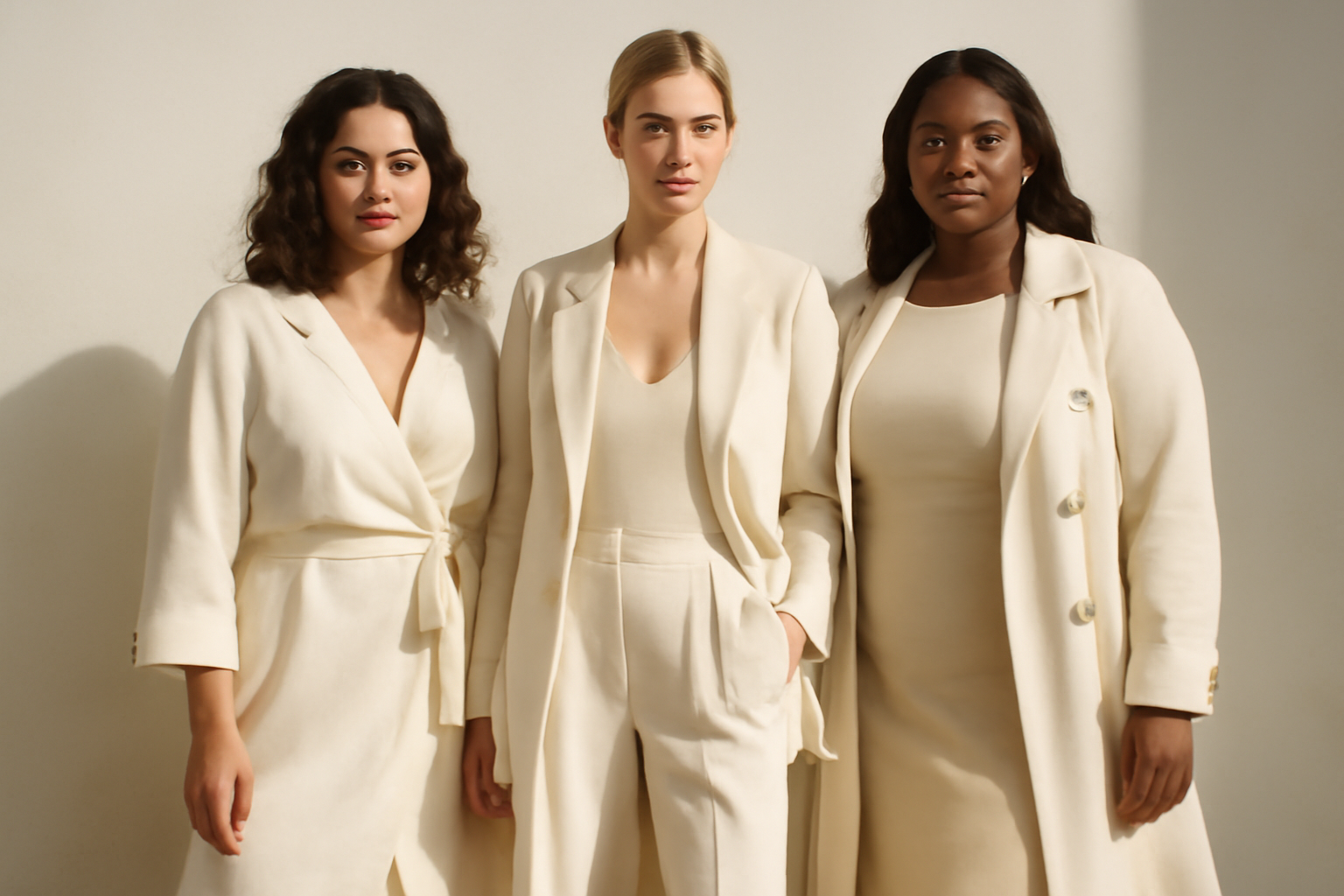
If you've ever Googled "how to dress for your body type," you've probably landed on a chart telling you whether you're a pear, an apple, a rectangle, or an hourglass. Maybe you felt seen. Maybe you felt vaguely insulted. Maybe you got halfway through the recommendations and thought - none of this sounds like clothes I'd actually wear.
Here's the thing: knowing how to dress for your body type is genuinely useful. But most of the advice out there treats it like a rigid rulebook instead of what it actually is - a framework for understanding proportion.
This guide is about the practical version. How to use body shape as a starting point, not a life sentence.
Why Body Type Dressing Is About Proportion, Not Rules
The goal of dressing for your body type isn't to "fix" anything. It's to understand how different silhouettes interact with your proportions so you can make intentional choices.
When a pair of trousers makes your legs look shorter than they are, that's a proportion thing. When a structured jacket makes your waist look more defined, that's also a proportion thing. You can use this to your advantage once you understand the basic mechanics.
The five most commonly used body type categories in fashion are:
Hourglass: Bust and hips are roughly equal in width, with a noticeably narrower waist. This is the shape most clothes are technically designed for, which doesn't make it easier to dress - it just means different problems.
Pear (or triangle): Hips are wider than shoulders and bust. Weight and volume sit lower on the body.
Inverted triangle: Shoulders and bust are wider than the hips. Upper body carries more visual weight.
Rectangle (or athletic): Bust, waist, and hips are all roughly similar in width. Very little waist definition naturally.
Apple (or round): Weight is carried primarily in the midsection. Hips and shoulders may be narrower than the waist.
Most people don't fit cleanly into one box. That's fine. Use whichever description best explains where clothes tend to pull, gap, or feel off on your body, and borrow selectively from the others.
How to Dress for Your Body Type: Shape by Shape
Pear Shape: Balancing a Wider Lower Half
The classic advice here is to "draw attention upward." That's oversimplified but not wrong.
Clothes that work well for pear-shaped bodies:
- Structured or embellished tops. Volume, texture, or interesting necklines on the top half help balance the visual weight of wider hips and thighs.
- A-line skirts and dresses. These skim over hips and thighs without clinging, creating a cleaner line.
- Wide-leg trousers. These are often counterintuitive, but they actually work. They create a continuous vertical line from hip to hem, rather than emphasizing the hip-to-thigh transition that fitted trousers can.
- Midi lengths. They break the body at the slimmest part of the lower leg, which tends to be more flattering than a hemline that cuts across the widest part of the thigh.
What to approach with caution: cropped tops that end right at the hip (they draw attention directly to the widest part), and very fitted bottoms paired with plain tops.
The honest takeaway: most of the time, the issue isn't the shape itself - it's that standard sizing is designed for a more uniform distribution of width. Tailoring makes a bigger difference for pear shapes than almost anything else.
Inverted Triangle: Adding Visual Width to the Lower Half
Broader shoulders and a narrower lower body means you want to create some visual balance downward.
Things that tend to work:
- Wide-leg, flared, or pleated trousers. They add structure and presence to the lower half without making the upper half feel heavy.
- Full or A-line skirts. A midi or maxi skirt with some volume around the hips creates proportion where there isn't much naturally.
- Scoop necks and V-necks. They create a softer, narrower line at the shoulder compared to boat necks or wide off-the-shoulder styles.
- Softer fabrics on top. Drape and fluid fabrics reduce the visual bulk of broader shoulders better than stiff, structured materials.
What to be careful with: sharp-shouldered blazers (they amplify the shoulder line further), very full statement sleeves, and peplum tops that add bulk at the hip but also end before creating enough visual weight.
Rectangle: Creating the Illusion of Curves
If your shoulders, waist, and hips are roughly the same width, you have a lot of flexibility - but clothes designed to "define the waist" often read as more effort than they're worth.
What works better:
- Belted styles. A belt at the natural waist - even a thin one - introduces a curve that the body doesn't create on its own.
- Wrap dresses and tops. The diagonal line of a wrap neckline suggests waist definition without requiring it structurally.
- High-waisted bottoms. They set a visual waist point that creates proportion between the upper and lower body.
- Texture and layering. When you have a straight silhouette, texture (ribbing, pleating, boucle) adds visual interest in place of shapeliness.
What doesn't usually help: drop-waist styles (they pull the eye to where there's the least definition), very boxy outfits without anything to break up the line.
Apple Shape: Defining Without Constricting
The standard advice - "empire waist, flowy fabrics, avoid anything fitted at the midsection" - is outdated and patronizing. Here's the more nuanced version.
Clothes that work for apple shapes:
- V-necks and open necklines. They draw the eye up and create a vertical line, which lengthens the overall silhouette.
- Straight-leg or wide-leg trousers. Fitted through the hip and thigh (where there's less width) with a straight or wider leg creates a clean line.
- Shift dresses with some structure. Not billowy tents - a dress that has some body and skims (rather than clings or swamps) through the midsection.
- Monochromatic outfits. Wearing one color head to toe is one of the most effective tools for creating an elongated, streamlined silhouette.
The key thing to know: clingy fabrics over the midsection rarely look better than you think they will. It's not about hiding - it's that looser, structured fabrics just fit better.
Hourglass: Working With What You Have (and the Fitting Problems It Creates)
Hourglass shapes are supposedly the easiest to dress, and structurally that's true - defined waist, balanced proportions. But the gap between waist and hip measurements causes constant fit problems in jeans, trousers, and fitted dresses.
What works well:
- Wrap dresses. They're designed to accommodate waist-to-hip variation, which is exactly the issue.
- Stretchy, form-following fabrics. Jersey, stretch crepe, and ponte knit all move with the body rather than against it.
- High-waisted everything. High-waisted trousers and skirts sit at the narrowest point, which reduces the gap problem.
- Belted styles. Same reasoning as above.
The real challenge: finding trousers that fit both the waist and the hips without gaping at the back. Most women with hourglass proportions end up going up a size and taking in the waist, or wearing stretch fabrics exclusively.
The Piece Advice Misses: Testing Actually Matters
Every body type guide works better in theory than in practice. The reason is that you can't predict how a garment will interact with your specific proportions until you're wearing it.
Two pear-shaped women in the same wide-leg trousers can look completely different based on their height, their waist length, how they carry their weight, and where exactly the pants sit on their body.
This is where actually seeing yourself in photos - not just a mirror - helps more than any rule. Mirrors in fitting rooms are designed to flatter. Photos show you what everyone else sees.
A lot of women have started using apps like StylePal to compare outfit photos side by side before committing to a look. Upload two versions of the same outfit (one with wide-leg trousers, one with straight-leg) and the AI gives you a side-by-side comparison with honest feedback on which works better for your proportions. It's less about following rules and more about testing them on your actual body.
What All Body Type Advice Gets Wrong
Most guides treat "dressing for your body type" as if the goal is always to look as close to an hourglass as possible. That's a narrow (pun intended) way to think about it.
Proportion dressing is a tool, not an aesthetic. You can use it to create balance if that's what you want. You can also use it to intentionally break the rules - exaggerating volume in one place, creating unexpected silhouettes, wearing the "wrong" thing for your body type on purpose because you like the way it looks.
Understanding why something does or doesn't work on your body gives you the ability to make intentional choices either way. That's the actual goal.
A few things that matter more than body type rules:
Fit. A well-tailored garment in the "wrong" silhouette beats an ill-fitting garment in the "right" one every time. Tailoring is consistently the highest-return investment in your wardrobe.
Fabric quality. Cheap fabric falls badly on every body type. The same garment in a quality fabric looks dramatically different.
Confidence. Genuinely. A person who wears something like they chose it on purpose reads completely differently than someone who looks uncomfortable.
How to Actually Figure Out What Works for You
If you're not sure where to start, here's a practical approach:
- Identify your actual fit problems. Where do clothes consistently gap, pull, or feel wrong? That's more useful than fitting yourself into a category.
- Take photos, not just mirror selfies. A full-length photo in natural light shows proportion more accurately than a fitting room mirror.
- Test one variable at a time. Try the same top with two different bottom silhouettes. See which one actually works on your body before buying.
- Notice what you've gotten compliments in. Compliments are imperfect data, but patterns are useful.
- Use comparison tools. If you're ever unsure between two options, side-by-side comparison - whether from a friend's opinion or an app like StylePal - cuts through indecision faster than anything.
The goal isn't to dress "correctly." It's to wear clothes that make you feel good and look the way you actually want to look. Body type frameworks are one tool for getting there - not the whole answer.