How to Use an AI Outfit Picker for Travel Without Overpacking
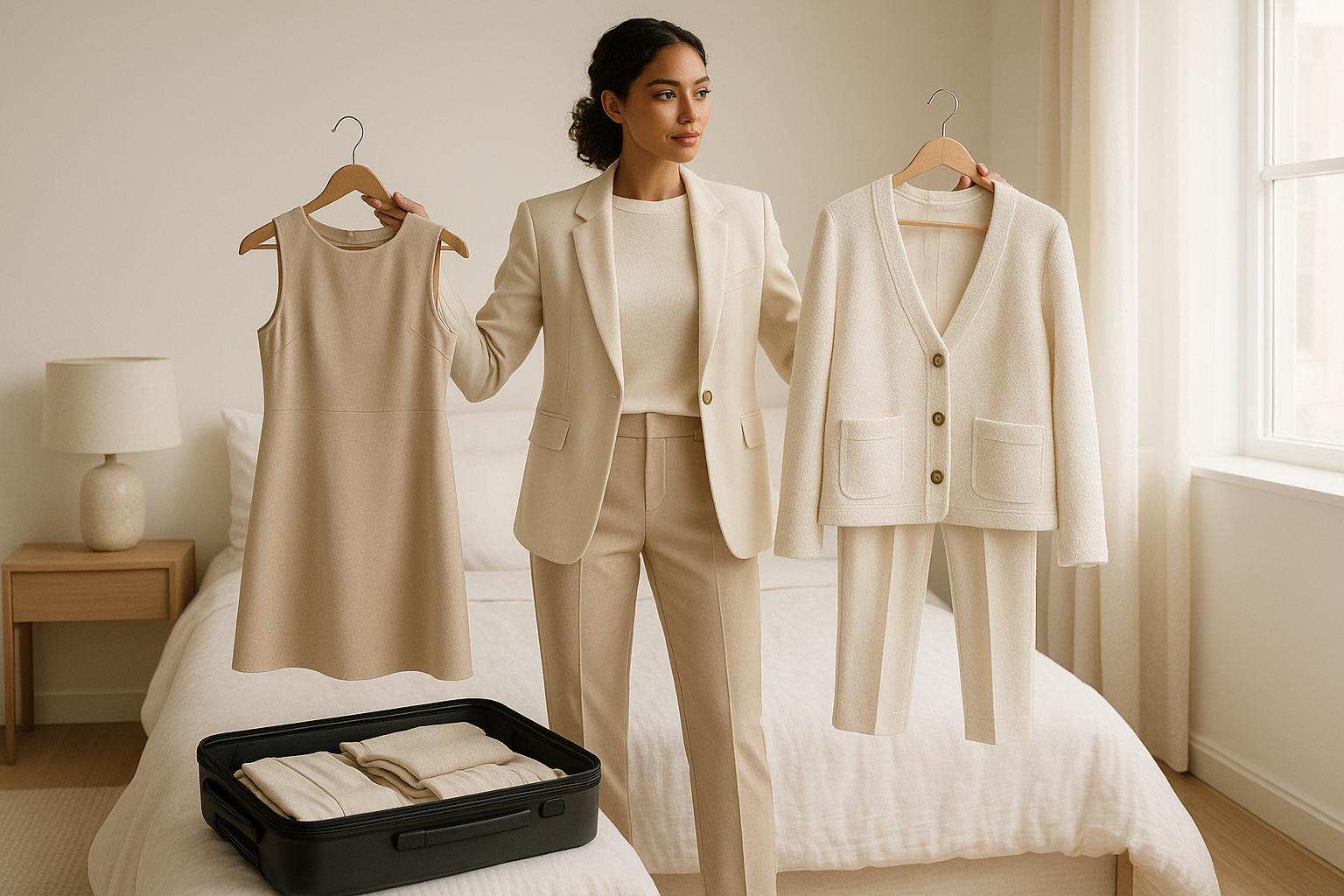
Using an AI outfit picker for travel sounds a little extra until you're on your bed surrounded by six "just in case" tops, three pairs of shoes, and a suitcase that somehow feels full before you've packed underwear. Travel has a way of making outfit indecision worse. You want to feel cute, practical, weather-ready, and photo-ready, all at once.
That's why an AI outfit picker can actually help. Not because it magically turns you into a fashion editor, but because it gives structure to the part that usually gets messy: comparing looks, spotting gaps, and figuring out what you'll really wear.
If you've ever packed too much and still felt like you had nothing to wear, this is the version that works.
Why Travel Makes Outfit Decisions Harder
At home, bad outfit decisions are low stakes. If your shoes annoy you, you change them. If a jacket feels wrong, you swap it out. On a trip, every decision gets locked in before you leave.
That pressure makes people overpack. Not because they need more clothes, but because uncertainty feels safer when it's folded into a carry-on.
A few numbers help explain why this happens:
- Reporting cited by UpCounting from Statista's Consumer Insights survey found that about one in four clothing purchases gets returned, which says a lot about how often people misjudge clothes before wearing them in real life.
- Search results summarizing clothing decision fatigue research say women spend about 16 minutes on weekdays choosing clothes. That is at home, with access to the full closet.
- Another commonly cited wardrobe stat is that only around 20% of a wardrobe gets worn regularly. Most of us already own more options than we truly use.
Travel takes all of that and compresses it into one packing session.
What an AI Outfit Picker Is Actually Good At
An AI outfit picker is not a replacement for taste. It will not know your trip better than you do. It also should not be making every style decision for you.
What it *is* good at:
- comparing two similar outfit options fast
- helping you notice proportion, color balance, and polish
- reducing the "they both seem fine?" spiral
- testing whether one item can work across multiple looks
- helping you edit your packing list before it gets out of hand
This is why the best way to use an AI outfit picker for travel is before the trip, not just during it.
Start With the Trip, Not the Clothes
Before you photograph anything, get clear on the shape of your trip.
Ask yourself:
- What is the weather range?
- Will you walk a lot?
- Are there dressier dinners or events?
- Will you rewear pieces across multiple days?
- Are you packing for photos, comfort, or a mix of both?
A beach trip, a city weekend, and a work conference need different outfit logic.
This sounds obvious, but a lot of overpacking starts when people build outfits around fantasy plans instead of the actual itinerary. If you're spending most of your time walking, sitting in transit, and grabbing casual dinners, you probably do not need four "statement" outfits.
Build a Mini Travel Outfit Matrix
Before using any AI tool, make a simple list with three columns:
- Core bottoms
- Repeatable tops or layers
- Shoes and accessories
Your goal is not to create twenty totally different looks. Your goal is to create a small set of outfits that can stretch.
A good starting point for a 4 to 5 day trip looks like this:
- 2 bottoms
- 3 to 4 tops
- 1 layer
- 2 pairs of shoes
- 1 bag
- 1 or 2 accessories that change the vibe
That formula is boring on paper, which is exactly why it works. You want enough variety to feel like yourself, but not so much variety that nothing coordinates.
Photograph Full Outfits, Not Random Pieces
This is where most people waste time. They compare a top with another top, or two dresses hanging on a door, then wonder why the result still feels unclear.
An AI outfit picker works better when you give it the real decision. That means full outfits with shoes, outerwear, and bag if those elements matter.
Why? Because styling is relational.
A plain tank and trousers can look forgettable on a hanger, then look expensive once you add the right sandal, earring, and jacket. A dress you love can suddenly feel wrong once you pair it with the only shoes you can realistically walk in.
So take full-length photos in decent natural light. Stand the same way in each shot. Keep the background simple. If you're deciding between two airport outfits, compare *those* two airport outfits. Same for dinner, sightseeing, or travel-day layers.
Compare by Scenario, Not by Category
This is the step competitors often miss. They talk about generating outfits, but not about reducing real travel friction.
Instead of asking, "Which top should I bring?" ask:
- Which outfit works better for the flight?
- Which dinner look feels polished but still comfortable?
- Which sightseeing outfit looks good *and* works with sneakers?
- Which layer makes the most sense if the temperature drops?
Scenario-based comparison is much more useful than category-based comparison. Travel style is situational.
This is also where StylePal makes sense as a practical tool. You can upload two outfit photos and compare them side by side instead of trying to judge them from memory in bad bedroom lighting. That is especially helpful when both options are decent and you need help picking the better one.
Use the AI to Edit, Not to Add More
The biggest trap with travel fashion content is that it quietly encourages you to pack more. More backup options. More "elevated" pieces. More shoes for different moods.
That is not what you want from an AI outfit picker.
Use it like an editor.
A simple rule: if one piece only works in one outfit, it needs to earn its place. If another piece works in three outfits and still looks good in photos, that piece is doing real work.
For every item you're unsure about, compare:
- outfit with the item
- outfit without the item
- substitute option using something you already planned to bring
This helps you cut the emotional extras that sneak into a suitcase because they *might* be useful.
Focus on Repeatable Outfit Formulas
The best travel wardrobes are usually built on formulas, not standalone looks.
Think:
- linen trousers + fitted tank + oversized shirt
- straight-leg jeans + knit top + blazer
- midi skirt + simple tee + flat sandal
- black dress + light layer + one statement earring
Once you know your formulas, an AI outfit picker can help you choose the strongest version of each one.
That matters more than having ten unrelated outfits. Repetition is not a travel failure. Repetition is how stylish travelers actually pack.
The trick is to repeat silhouettes while changing one element, like jewelry, shoe choice, or layer.
Don't Ignore Shoes, Because They Decide More Than You Think
A lot of trips go wrong at the shoe level.
You pack outfits around one heel you swear you'll wear, then end up living in sneakers and suddenly half your suitcase stops making sense.
When using an AI outfit picker for travel, always run at least one comparison where the shoes are realistic. Not aspirational. Realistic.
If you're walking five miles, catching trains, or standing in line, your best outfit is the one that still works with comfortable shoes. That one constraint usually reveals which looks are actually versatile.
Make One "No-Thought" Outfit
Every trip needs one outfit you can wear when you're tired, late, bloated, overstimulated, or simply not in the mood to think about style.
This is the outfit that saves you on travel days and weird in-between moments. It should be comfortable, photo-safe, weather-flexible, and easy to repeat.
An AI outfit picker is great for choosing this because the differences between two good basics can be subtle. One version may hang better, balance your proportions better, or simply look more intentional.
Once you lock in your no-thought outfit, pack it with confidence and stop trying to improve it.
Use Photos to Catch What Mirrors Miss
Mirrors are weird. Hotel mirrors are often worse.
Photos are better for seeing:
- whether proportions feel off
- whether a bag overwhelms the outfit
- whether a hem length cuts the body awkwardly
- whether colors look flat together
- whether one look simply seems more current
This is one of the strongest reasons to use an AI outfit picker for travel. You're creating distance from the emotional side of packing. Instead of "but I love this top," you can ask, "does this actually make the outfit stronger?"
That shift saves space and regret.
A Simple Travel Packing Workflow That Actually Works
If you want the shortest possible version, do this:
- Plan outfits by trip scenario.
- Build around 2 bottoms and a few repeatable tops.
- Take full outfit photos, not item photos.
- Use an AI outfit picker to compare similar looks side by side.
- Keep the version that works with realistic shoes.
- Cut pieces that only serve one weak outfit.
- Pack one no-thought look you know you can rely on.
That is it. No giant spreadsheet. No panic shopping two days before departure.
The Real Goal Is Confidence, Not Perfection
Travel style does not need to be flawless. It needs to be easy.
The smartest use of an AI outfit picker is not chasing the most impressive outfit. It's reducing friction so getting dressed on your trip feels simple. You want fewer choices, better combinations, and less second-guessing.
If a tool helps you compare looks clearly, spot the stronger option, and pack lighter, that's useful. If it pushes you toward more noise, more options, and more overthinking, ignore it.
StylePal works best here as a quick decision layer. You upload two travel outfit photos, get an instant side-by-side read, and move on. No drama. Just a faster way to decide what deserves space in your suitcase.