AI Fashion Advice Is Actually Getting Good - Here's What Changed
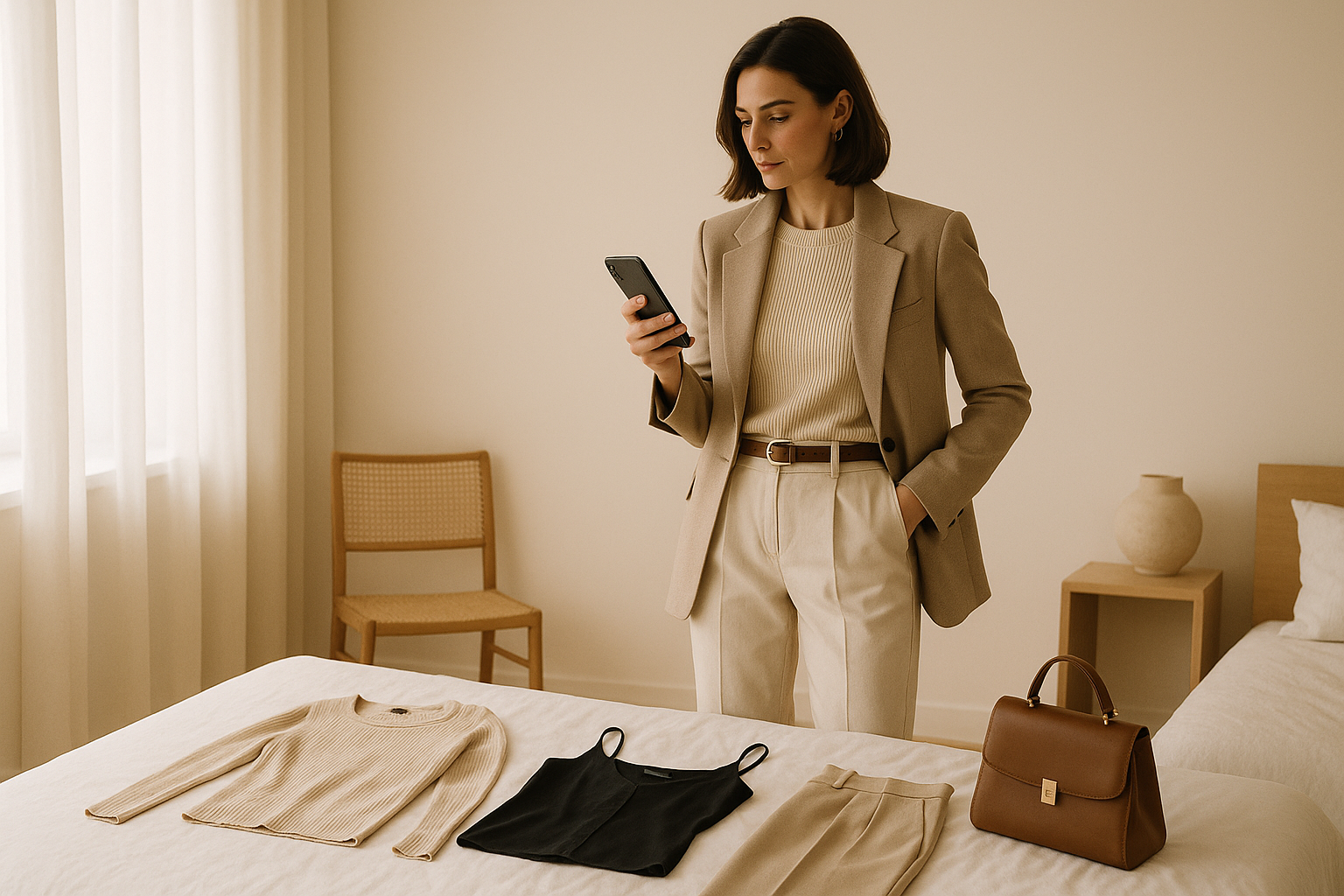
AI fashion advice used to be a joke. You'd answer a quiz, get three generic outfit suggestions, and wonder why you bothered. But something changed in the past year or two - and if you dismissed AI styling tools early on, it might be time to look again.
The AI fashion market hit $2.89 billion in 2025 and is growing at nearly 40% a year. That's not hype money. That's real investment going into tools that actually help people get dressed. And the results are starting to show.
Here's what's working now, what still isn't, and how to think about AI fashion advice in a way that actually improves how you dress.
What "AI Fashion Advice" Actually Means Now
It's worth separating the different types, because they're not all the same.
Outfit comparison tools let you upload photos of two looks and get a scored breakdown - which reads better, which fits the occasion, which feels more polished. This is probably the most immediately useful form of AI fashion advice because it mirrors what you'd actually ask a friend.
Style profiling tools try to learn your preferences over time. You rate outfits, answer questions about your lifestyle, and the AI builds a sense of your aesthetic. Some are impressive. Others just resurface the same silhouettes in different colors.
Trend forecasting tools are mostly for brands and stylists, not everyday users. They analyze runway data, social media patterns, and search behavior to predict what's going to pop. Useful context, but not practical for "what do I wear today."
AI chatbot advice - asking ChatGPT or similar tools for outfit ideas - can actually be pretty solid if you give it real context. Describe your body type, the event, what you already own, and your color preferences. Vague prompts get vague answers.
The Things AI Fashion Advice Does Really Well
Removing your blind spots. When you've worn the same handful of outfits for years, you stop seeing them clearly. You can't tell anymore if something still fits right, reads dated, or just isn't doing you any favors. A fresh AI assessment has no nostalgia for your old favorite blazer.
Killing decision fatigue. The average person makes over 35,000 decisions a day. Getting dressed is one of the first, and it shouldn't drain you before you've had coffee. When you're torn between two outfits, having something outside your own head make the call - backed by actual style logic - is genuinely useful.
Giving you language for what you already feel. You might know an outfit isn't quite right but not be able to say why. Good AI fashion advice names it: the proportions are off, the color temperature is pulling in opposite directions, the footwear is breaking the line of the look. Having that vocabulary helps you get better at dressing, not just get dressed.
Occasion-matching. You know your clothes. You don't always know how they read to others in a specific context. AI fashion advice can flag when something is too casual, too formal, or sending the wrong signal for a particular setting - without the social awkwardness of asking someone in real life.
The Things It Still Gets Wrong
Fit is almost impossible to assess from photos. AI can see that a blazer looks boxy, but it can't tell you whether that's intentional oversizing or a shoulder seam that's two inches too wide. Fit advice from AI should be taken as a starting point, not gospel.
It doesn't know your life. AI doesn't know you've been wearing that dress to every company event for three years. It doesn't know that the "polished" color palette it keeps suggesting makes you feel like someone else. Context matters, and AI has limited access to yours unless you tell it explicitly.
Trend advice can push you toward things that don't suit you. An AI trained on social media data will naturally favor what's performing well on Instagram right now. That might be perfect for you. It might also be completely wrong for your body type, skin tone, or actual life. Good AI fashion advice should filter through your personal parameters, not just reflect aggregate trends.
It can't feel fabric, weight, or how something moves. A lot of what makes an outfit work in real life is tactile - a jacket that photographs beautifully but feels stiff, a silk blouse that drapes perfectly but wrinkles on the commute. AI advice is always working from a flat image of something three-dimensional.
How to Actually Use AI Fashion Advice Well
The people getting the most out of these tools treat them like a second opinion, not a verdict.
Give it real context. Don't just upload a photo and wait. Tell the tool where you're going, what impression you want to make, what you're worried about. The more specific the input, the more useful the output.
Test it against your gut. If an AI tells you an outfit is great but something still feels off, listen to that feeling. And if it flags something you'd never have questioned, sit with that before dismissing it. You might be too close to see it clearly.
Use it to build skills, not create dependency. The best outcome isn't that you need AI to get dressed every day. It's that you start to internalize the feedback - the stuff about proportion, color balance, occasion-reading - and apply it yourself over time.
Document what works. Take photos of outfits you feel great in. Build a reference library. The most useful AI fashion advice comes when the tool has something to compare against. You're not just getting a one-off rating; you're building a dataset of what your best self looks like.
Where StylePal Fits In
StylePal is built around one specific, genuinely useful thing: you upload two outfit photos, and it tells you which one is the stronger look and why.
That's it. No elaborate profiling, no trend reports, no push to buy anything. Just a direct answer to the question most of us actually have standing in front of the mirror - which one should I wear?
It's the comparison side of AI fashion advice, executed simply. You get a score, a breakdown, and enough context to understand the reasoning. Over time, those comparisons start to add up into a real understanding of what works for you.
The AI fashion advice market is maturing fast. The tools that are winning are the ones that solve a specific, real problem instead of trying to do everything. And the users getting the most from them are the ones who treat the output as information, not instruction.
Your style is yours. AI can help you see it more clearly.